Clothing Take-Back Programs Compared: What They Accept and Where the Clothes Go
Oct 10, 2026 · Dana Reyes
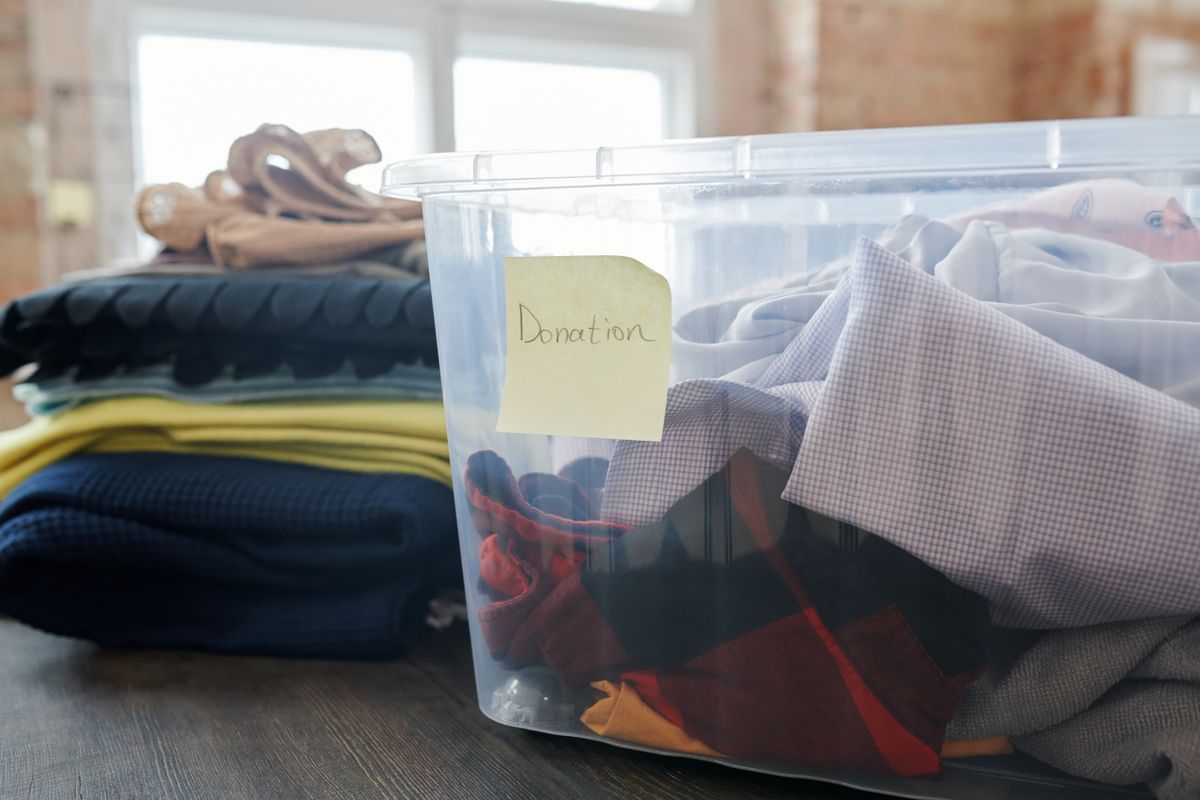
Most major clothing retailers now have a take-back bin, and the programs look interchangeable until you read the terms. What each one accepts, what you get, and what actually happens to the clothes afterward vary more than the signage suggests.
Three kinds of program
Brand take-backs come in three shapes, and the shape tells you where your clothes end up.
Any-brand collection. H&M’s Garment Collecting, running globally since 2013, takes clothes from any brand in any condition; The North Face’s Clothes the Loop and Zara’s containers work similarly. The reward is usually a voucher — 15% off a future H&M purchase in the US — and the clothes go to a commercial sorter.
Brand-specific buyback. Patagonia’s Worn Wear, Eileen Fisher’s Renew and Levi’s SecondHand take their own labels, give store credit or a gift card, and route wearable items into repair and resale.
Material recovery. Nike’s Reuse-A-Shoe collects athletic shoes of any brand — excluding sandals, dress shoes and anything with metal — and grinds them into sports surfacing material. Madewell’s Denim Trade-Up takes any brand of jeans, gives $20 off new Madewell jeans, and sends unusable pairs to Cotton Inc.’s Blue Jeans Go Green insulation program.
| Program | Accepts | Reward | Typical path |
|---|---|---|---|
| H&M Garment Collecting | Any brand, any condition | Voucher (15% off next purchase, US) | Sorted into rewear, reuse, recycling |
| The North Face Clothes the Loop | Any brand | Voucher | Sorted for reuse or recycling |
| Patagonia Worn Wear | Patagonia gear | Store credit | Repaired and resold where possible |
| Eileen Fisher Renew | Eileen Fisher, any condition | Gift card | Sorted, resold or reworked |
| Levi’s SecondHand | Levi’s denim | Gift card | Cleaned, repaired, resold |
| Madewell Denim Trade-Up | Any brand of jeans | $20 off | Resold or shredded into insulation |
| Nike Reuse-A-Shoe | Athletic shoes, any brand | None | Ground into sports surfacing |
Where the clothes actually go
H&M’s published pipeline is the clearest public account. Its sorting partner, I:CO, divides collected textiles into rewear (wearable clothes resold as second-hand), reuse (items turned into other products such as cleaning cloths) and recycle (everything else shredded into fibre for insulation). H&M reported collecting 29,005 tonnes in 2019.
The third category is where most volume lands. Fewer than 1% of the material used to make clothes is recycled back into new clothes — a figure the industry itself repeats — and EPA data for 2018 put the U.S. textile recycling rate at 14.7% of 17 million tons generated, most of it downcycled into insulation, rags or carpet padding. Take-back is diversion from landfill, not circularity, and our greenwashing claims checklist covers how to read that language.
How to use a program well
Sort before you drop. A wearable garment is worth more as clothing than as filler: resale or donation keeps it in use longer and, on most platforms, pays you. Save take-back for what is genuinely past that point — stained, torn or too worn to sell.
Then read the terms: any brand or own-brand only, condition limits, whether the reward is store credit, a voucher with a minimum spend or nothing, and whether you drop off in store or mail items in. Clean, dry items are accepted more readily than damp or soiled ones. And do not buy something new to earn a voucher — that is the one way a take-back program makes the waste problem worse.
The same logic of keeping clothes in use runs through our guide to washing secondhand clothes and our notes on visible mending. When a garment still has life in it, repair beats recycling.
FAQ
- Do clothing take-back programs actually recycle the clothes?
- Mostly no, in the strict sense. H&M's published pipeline shows collected textiles sorted into rewear (wearable clothes resold as second-hand), reuse (items turned into other products such as cleaning cloths) and recycle (everything else shredded into fibre for insulation-type material). True fibre-to-fibre recycling remains a small fraction of the flow — fewer than 1% of the material used to make clothes is recycled back into new clothes — and EPA data for 2018 put the overall U.S. textile recycling rate at 14.7% of 17 million tons generated.
- Can I bring in clothes from any brand?
- It depends on the program. Any-brand collection includes H&M's Garment Collecting, The North Face's Clothes the Loop, Zara's in-store containers and Madewell's denim trade-up. Own-brand-only programs include Patagonia's Worn Wear, Eileen Fisher's Renew and Levi's SecondHand. Check the terms before loading a bag, since turning up with the wrong brand wastes the trip.
- Is take-back better than reselling or donating?
- For anything wearable, resale or donation is usually the better outcome: the garment stays in use as clothing, and resale pays you rather than issuing a voucher. Take-back suits garments that are stained, torn or too worn for either. Sorting a bag into wearable and worn-out piles before drop-off captures most of the benefit.
Edited by
Dana Reyes
Researches garment construction, fibre content and brand sustainability claims. Ten years between the retail floor and editorial fact-checking.