One Blazer, Five Ways: What the Jacket Has to Be
Sep 25, 2026 · Dana Reyes
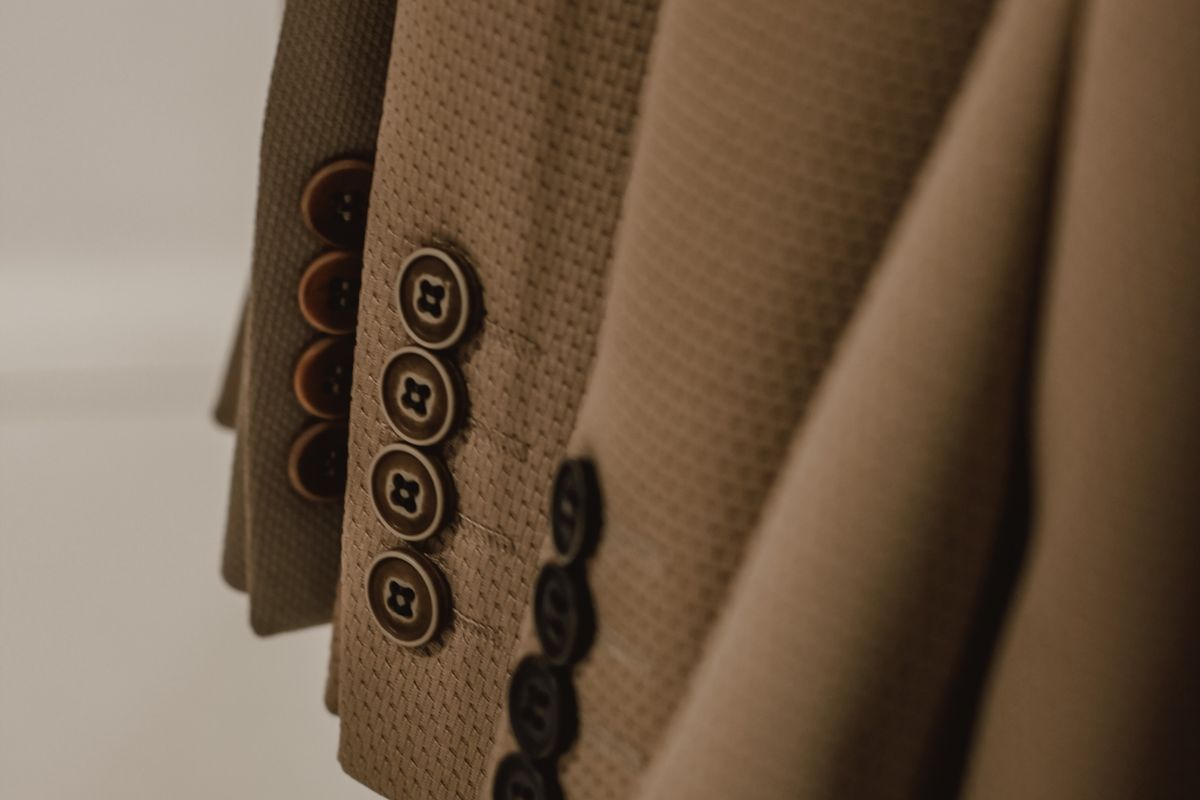
“One blazer, five ways” is usually presented as five photographs of the same jacket with five different accessories. The accessories are the easy part and the least consequential part. What decides whether a jacket can carry five outfits is the jacket itself — shoulder, cloth, colour and length — and most blazers on the rail can carry two. The ones that reach five share a narrow set of properties, and it is worth knowing what they are before you buy anything.
What the jacket has to be
The shoulder is the whole argument. The shoulder seam should end close to where your shoulder ends. If it runs well past that point, the jacket reads as casual and will not survive a meeting; if it is padded and roped, it reads as business and will not sit over a T-shirt without looking borrowed. A soft, unset shoulder — the kind tailors call a natural or spalla camicia shoulder — is the version that tolerates both a woven collar and a knit underneath, because it has no fixed shape of its own to argue with.
Cloth weight decides the season range. You want a wool or high-wool blend heavy enough to hang without creasing along the back, and light enough to go under a coat in January. A high-twist wool is worth looking for: the tight twist in the yarn is what lets a jacket recover from a day in a car seat or an aeroplane rather than holding the crease until it is pressed. Read the fibre label rather than the product name here — a jacket sold as wool can carry a substantial polyester share, and a polyester-heavy cloth behaves very differently at year three, tending to shine at the elbows and hold wrinkles. Our piece on reading a composition tag covers what to look for.
Colour, then length. Navy or charcoal, in a matte finish with no sheen. Both work across grey, ecru, oat and indigo; black narrows the range and pulls everything toward evening. Single breasted, two button, notch lapel of middling width, and a hem that covers the seat without dropping to mid-thigh. A half-lined or unlined body keeps the jacket wearable across three seasons instead of one.
The fitting test is simple and worth doing in the changing room: button the jacket, sit down, and raise both arms to shoulder height. If the lapels bow away from the chest when you button it, the body is too tight and no tailoring will fully fix it. If the collar lifts off the back of your neck when you raise your arms, the shoulder is wrong.
The five outfits
Each of these changes one variable from the one before it. That is the method — not five unrelated looks, but one jacket moving across a narrow formality band.
1. A weekday meeting. White oxford shirt, charcoal wool trousers, leather loafers. The detail that does the work: the shirt collar is stiff enough to stand up inside the jacket collar, and the jacket is buttoned. Sleeves finish at the wrist bone so a centimetre of shirt cuff shows. No tie, no pocket square.
2. Dinner. The same trousers and loafers, with a fine-gauge merino crew in charcoal replacing the shirt. The detail is the absence of a collar: a collarless layer under a jacket is what moves it out of office territory, and it is a bigger change than any accessory. One button done, worn open above it.
3. Weekend, on denim. A fine-gauge merino T-shirt, straight-leg indigo denim, low leather sneakers. The detail here is the sleeve: push it once, to mid-forearm, rather than rolling it in a thick cuff. Leave the jacket open for the whole day — an unstructured jacket buttoned over a T-shirt looks like a jacket being worn for a reason.
4. With a midi skirt. A fluid shell or fine knit tucked into a wool midi skirt in oat, with ankle boots. The detail is hem proportion: the skirt should end either clearly below the jacket hem or well above it. The awkward place is within a couple of inches, where the two hems look like a mistake rather than a decision.
5. Travel day. Long-sleeved merino crew, the wool trousers, loafers or sneakers, and a wool scarf in the accent tone. The detail is that the jacket is worn, not packed, and the scarf is tucked inside the collar rather than looped outside it — which keeps the whole outfit to one silhouette when you arrive.
Why the sixth one starts to strain
Five outfits come from varying the layer underneath and the shoe, all inside one band of formality. A sixth requires leaving that band, and it can only be left in one of two directions.
Downward, a blazer stops working somewhere around shorts, athletic shoes and anything that reads as gym-adjacent. The jacket has a collar, a lapel and a shoulder; put it next to running shoes and the contrast is not relaxed, it is unexplained. Upward, it stops at anything with a dress code — a jacket with notch lapels and patch pockets is not a dinner jacket, and no amount of styling makes it one.
Weather closes the range from both ends at once. Above roughly 75°F with humidity, a wool blazer is the wrong garment regardless of what goes under it, and the answer is a linen or linen-blend jacket — a different purchase, not a sixth outfit. Below freezing, the blazer stops being the outer layer and becomes a mid layer under a coat, which is still an outfit but no longer one where the blazer is doing the styling.
So the honest ceiling is five, and the honest advice if you need seven is to own two jackets with different registers rather than pretending one crosses both. Two jackets worn twenty times each is not a worse outcome than one jacket worn forty times; the number that matters for cost, wear and footprint is the wear count per garment, not the garment count in the closet.
If you are building toward this, the audit in our capsule wardrobe formula is the place to start — a jacket earns its slot by how many existing pieces it unlocks, and an autumn capsule list gives the trousers, knits and boots that a navy blazer will actually sit with.
Keeping it in rotation
Hang it on a shaped hanger, brush it after wearing, and let it rest a day between wears so the wool recovers. Press as rarely as you can get away with — steam from a bathroom is enough for most creases, and frequent pressing is what flattens a cloth and shortens its life. When the elbows eventually shine or the lining goes, both are repairable: a tailor can replace a torn lining, and the buttons are the cheapest thing on the jacket to change when you want a different register.
FAQ
- What colour blazer works with the most outfits?
- Navy or charcoal. Both sit comfortably with grey, ecru, oat and indigo denim, and neither reads as evening-only the way black tends to. Choose black only if you regularly need a jacket after six in the evening.
- Can an unstructured blazer look sharp enough for a meeting?
- Usually, provided the shoulder is right. An unstructured jacket has no canvas and no shoulder pad, so it takes the shape of the body underneath it — a sloppy shoulder seam shows immediately, and a correct one looks deliberate rather than relaxed.
- How do I stop the same blazer from looking like the same outfit?
- Change the layer underneath it. Swapping a shirt for a fine knit, or trousers for denim, moves the jacket's register much further than any pocket square or belt will.
Edited by
Dana Reyes
Researches garment construction, fibre content and brand sustainability claims. Ten years between the retail floor and editorial fact-checking.