Caring for Linen: How to Wash, Dry, and Store It So It Lasts
Sep 29, 2026 · Dana Reyes
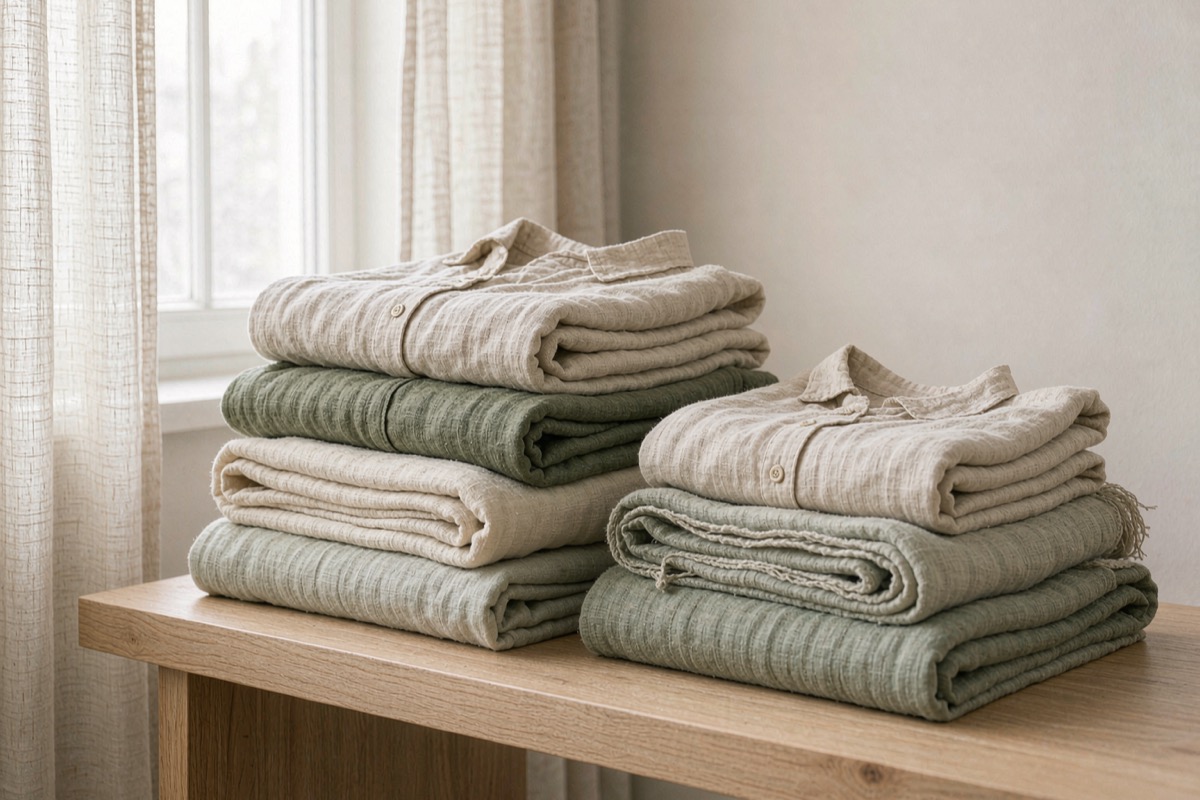
Linen might be the least fragile fabric in your closet and the one people treat the most delicately. It is stronger wet than dry and tolerates a hot iron, yet the garments that fail early usually fail from dryer heat, harsh bleaching, or washing far more often than they need. Care is the cheapest sustainability move you own: every extra season a linen shirt stays in rotation is a purchase you did not make.
Wash it less, wash it cool
Linen dries fast and does not hold odor the way denser cottons can, so most pieces need washing after a few wears rather than after each one. Air a shirt overnight and it is usually ready again. When you do wash: cool or lukewarm water, gentle cycle, mild detergent. Skip chlorine bleach, which weakens the fiber, and skip fabric softener, which coats it. Linen softens on its own with every wash and wear — softener just delays that. Hand washing works too, and because the fiber is stronger when wet, it survives a gentle squeeze far better than a knit would.
Drying: heat is the enemy of a good finish
The dryer is where linen loses its shape. High heat sets hard creases, shrinks the weave, and can snap fibers at the fold lines. Air dry instead: hang shirts and trousers on a hanger or lay heavier pieces flat, smooth the seams with your hands, and pull the garment into shape while it is damp. Linen dries quickly, which makes line drying practical even indoors. If you must machine dry, use the lowest heat and pull the piece out while it is still slightly damp.
To iron or not to iron
Linen wrinkles; that is part of how it looks. If you like the pressed version, iron while the fabric is still damp, on a hot setting, through a thin cloth or on the reverse side. Dry, creased linen responds to steam, though the results are softer-edged. If you would rather not iron at all, that is a legitimate choice: remove garments promptly, smooth them, and dry them hanging straight. What you should not do is iron a bone-dry piece at full heat, the fastest way to scorch or emboss permanent crease lines.
Stains, storage, and repair
Treat stains early with cool water and a little detergent rather than reaching for bleach. For storage, launder first, then hang or fold in a breathable space — cool, dry, away from direct sun. One reassuring fact: clothes moths feed on keratin, so they target wool and silk, not cellulose fibers like linen. Silverfish and crickets are the pests that can chew linen, and both are deterred by dry storage. Our guide to off-season storage and moths covers the wool side of that problem. Linen also takes well to mending: it frays at seams and wears thin at elbows and seat before it tears, so a visible patch or reinforcement extends its life comfortably. We explain the techniques in a beginner’s guide to visible mending.
Choosing linen that lasts
Care only stretches so far if the garment was thin to begin with. Fabric weight, weave density, and blend matter: a substantial plain-weave linen outlasts a gauzy fashion piece, and blends with hemp or organic cotton change how the fabric behaves in the wash. Our linen, hemp, and organic cotton guide walks through those differences. Buy fewer, heavier pieces, then let the routine above do its work: wash cool, dry without heat, iron damp or not at all, mend early. A garment handled this way is measured in years of wear, and years of wear is the most honest sustainability metric there is.
FAQ
- Can linen go in the dryer?
- Occasionally on the lowest heat, but air drying is the better default. High heat sets hard creases, shrinks the weave, and stresses fibers at fold lines. Pull linen out of the dryer while slightly damp and finish drying on a hanger.
- How do I get wrinkles out of linen without an iron?
- Smooth the garment by hand while it is damp and let it dry hanging straight, or hang it in a steamy bathroom. A garment steamer on damp fabric also works, though the finish is softer than a hot-iron press.
- How often should linen be washed?
- After a few wears rather than after each one. Linen dries quickly and does not trap odor the way denser fabrics can, so airing between wears handles most refreshes. Wash cool with a mild detergent and skip fabric softener.
Edited by
Dana Reyes
Researches garment construction, fibre content and brand sustainability claims. Ten years between the retail floor and editorial fact-checking.