Leather Shoe Care: Cedar, Conditioner and the Rotation Rule
Oct 7, 2026 · Dana Reyes
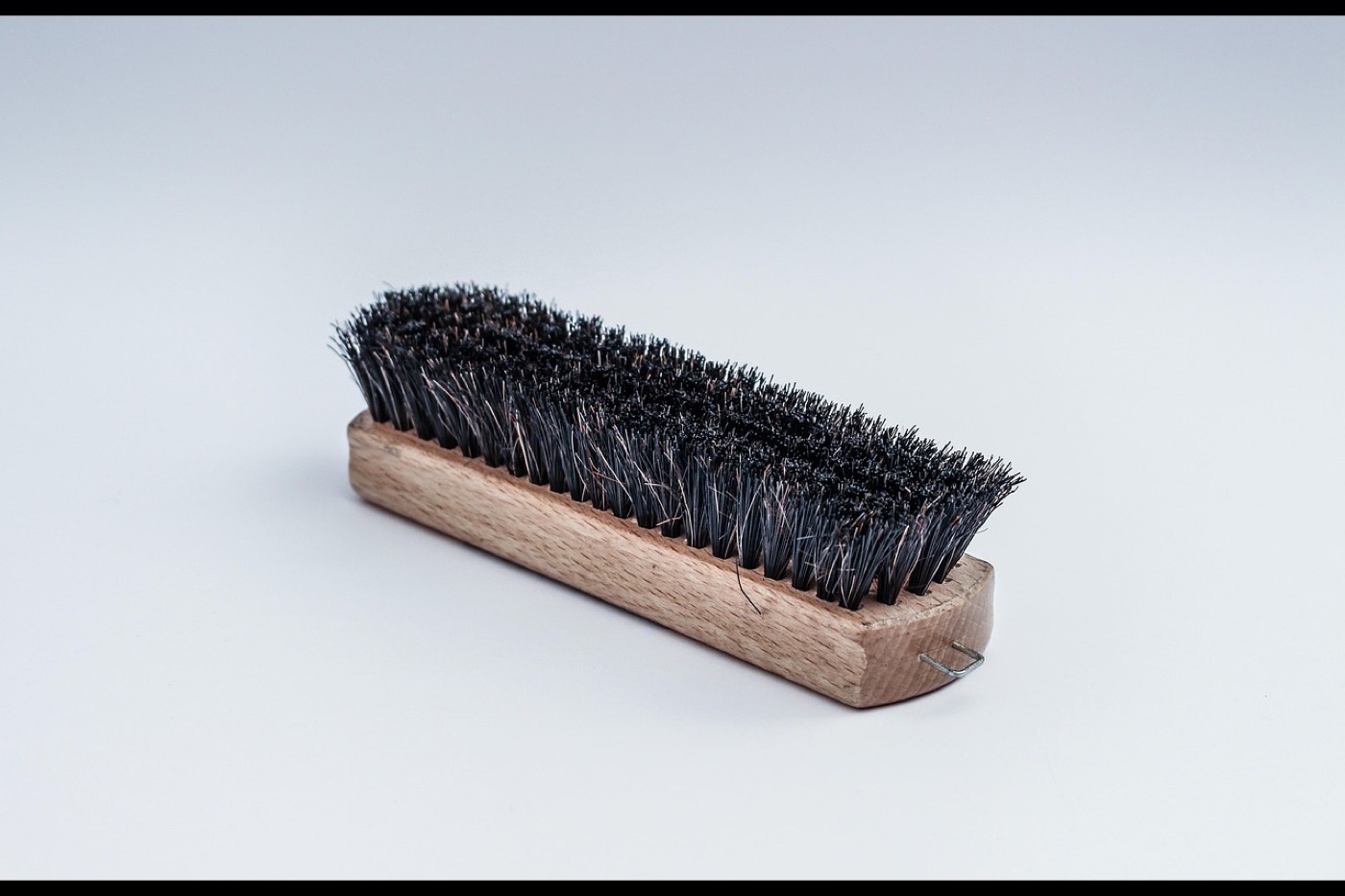
The most expensive shoes fail the same way the cheap ones do, and it is almost never the leather that quits. It is moisture: a day of wear fills the lining with the equivalent of a glass of water, the shoe dries however it happens to be sitting, the leather stiffens and cracks, the sole separates, and a good shoe becomes landfill with nice stitching. All of leather care follows from that one fact. Get the moisture cycle right and the rest of the routine is twenty minutes a month. Here is the whole system, cheapest interventions first.
Cedar trees and the rotation rule
Two interventions cost almost nothing and do most of the work. The first is a pair of cedar shoe trees, inserted while the shoe is still warm from your foot: they wick moisture out of the lining, hold the leather flat so creases do not set deep, and keep the toe from curling. Untreated cedar, spring-toe style. Plastic trees hold shape but absorb nothing, and they are a stand-in, not a solution.
The second is rotation: never wear the same leather pair two days running. A shoe needs a full day to dry from the inside, and a shoe worn daily is a shoe perpetually damp, which is the condition under which leather dies and odor settles in. Two pairs alternating will outlast one pair worn daily by more than double, which makes the second pair of shoes cheaper than the first. This is the rare sustainability rule that is also simply arithmetic.
Drying: the step where shoes are actually murdered
Wet shoes get destroyed at home more often than on the street. Never put leather on a radiator, in front of a fire, or in a hot car — direct heat drives moisture out too fast, and the leather contracts, stiffens and cracks, often by morning. The correct method is unglamorous: trees in, laces loosened, shoe on its side in a room-temperature spot away from the radiator. Stuffing with newspaper works for soaked shoes, changed once when damp. It takes a day. Respect the day.
Salt stains from winter streets are the exception that needs action: white rings of dried salt pull moisture out of leather as they dry. Wipe them off with a cloth dampened with a mix of water and a little white vinegar as soon as you get home, then let the shoe dry normally. Two minutes of attention saves the toe box.
Cleaning and conditioning: less than you think
Leather needs cleaning far less often than shoe-care marketing suggests. Every few weeks for regularly worn shoes: brush off dust with a horsehair brush, wipe with a barely damp cloth, let dry. Dirt ground into leather is abrasive; dust on the surface is cosmetic.
Conditioning is the step people get wrong in both directions. Under-conditioned leather cracks at the flex points — the vamp crease, the topline. Over-conditioned leather softens, darkens, and loses the structure a dress shoe is built on. The signal to watch is the leather’s own look: matte, pale, thirsty means condition; rich and waxy means leave it alone. Every two to three months for weekly-worn shoes is a reasonable ceiling. Apply a small amount of a quality conditioner, work it in with a cloth, wait ten minutes, buff. One application discipline matters: a thin coat twice beats a heavy coat once, because leather takes product gradually and anything sitting on the surface attracts dust.
Polish is the layer above conditioning, and it has jobs beyond shine. Cream polish adds pigment and light protection, which is why it earns its place on scuffed toes long before anyone cares about a mirror finish. Wax polish adds shine and a weather shell at the toe, applied in thin layers with a cloth and built up where the shoe creases. Neither replaces conditioning; both are cosmetic layers over a fed leather. A horsehair buff at the end of every wear — thirty seconds — is the maintenance that keeps the interval between real polish sessions long.
Suede runs a different program: no conditioner, no wax. A suede brush and a crepe eraser handle dry dirt, a protective spray handles weather, and a suede shampoo handles genuine stains. Suede’s worst enemy is being cleaned the way smooth leather is cleaned.
The sole: where resole economics decide everything
Turn the shoe over before you buy it. A Goodyear welt — a strip of leather stitching the upper, insole and welt together, with the outsole sewn to the welt — can be replaced by any competent cobbler, repeatedly. A Blake stitch is also resoleable, once or twice more cheaply. A cemented sole is glued, and most cobblers will tell you honestly that re-cementing a worn cemented sole rarely holds. This is the single construction feature that separates a ten-year shoe from a two-year one, and it is visible in the first thirty seconds of examining a shoe — our shoe capsule guide puts it in the wider buying context.
The math: a welted shoe at a mid-range price, resoled two or three times at a fraction of replacement cost, is cheaper per year than any cemented shoe and vastly cheaper than replacing it. Resole when the outsole is worn to the welt line or the heel is worn unevenly — waiting until you can feel stones through the sole means the midsole is already damaged and the job doubles.
Storage between seasons
Leather shoes stored in the original box for a humid summer grow mold and dry out in a heated winter closet. The routine: clean, condition lightly, trees in, cloth shoe bags, and a cool dry shelf rather than a sealed box — the same airflow principle that governs how we store wool between seasons, minus the moth stakes. Check on stored shoes when you change seasons, which costs nothing and catches problems while they are small.
The summary fits in a sentence: trees in when they come off, a day of rest between wears, room-temperature drying, feed the leather when it looks thirsty, and buy welted so a cobbler can keep the shoe alive. Twenty minutes a month, and the good pair lasts a decade. The care is the product.
FAQ
- How often should I condition leather shoes?
- Roughly every two to three months for shoes worn weekly, or when the leather looks matte and pale after cleaning. Over-conditioning is real: it softens leather and can darken it permanently. Feed the leather when it asks, not on a schedule.
- Are cedar shoe trees worth it?
- Yes, for any leather shoe you wear more than once a week. Cedar absorbs moisture from the lining, holds the shoe's shape, and deodorizes. A pair of trees costs less than a tenth of a resole and adds years of life on its own.
- Can a cemented shoe be resoled?
- Usually not economically. Cemented soles are glued and many cobbles cannot re-attach them durably. A stitched construction — Goodyear welt, blake stitch, or norvegese — is designed to be opened and resoled, which is why welting is the feature to check before buying.
Edited by
Dana Reyes
Researches garment construction, fibre content and brand sustainability claims. Ten years between the retail floor and editorial fact-checking.