The Sustainable Sneakers Guide: Uppers, Soles, Repairability and Marketing Claims
Sep 25, 2026 · Dana Reyes
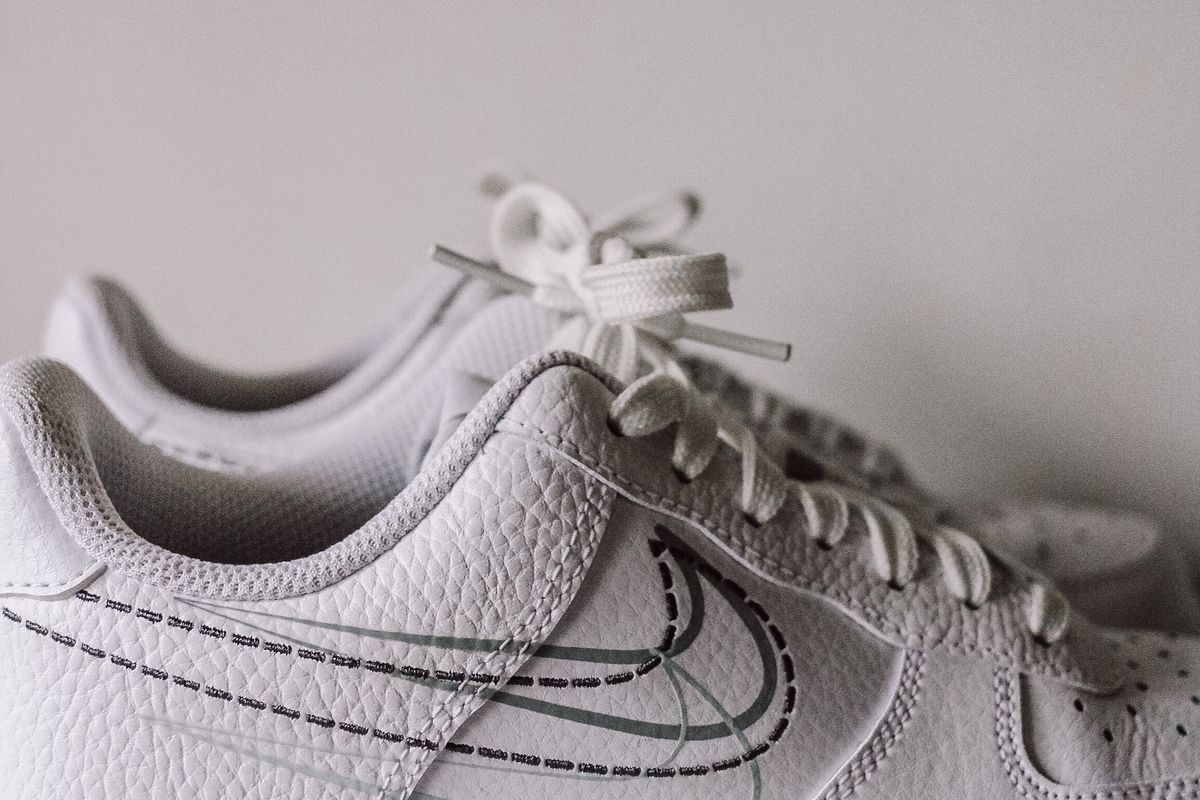
Sneakers are the hardest item in a normal wardrobe to dispose of well, and the easiest to market. A shoe is a stack of bonded materials that no recycling system is built to separate, so almost every claim on the box describes one component of something that will not come apart. This guide goes through the parts in the order a product page presents them — upper, sole, construction — and then separates the claims that describe real change from the ones that describe a material swap.
What the upper material actually trades off
Leather is the durable option and the one with the messiest chemistry. It resists abrasion, takes repair stitching, and moulds to the foot. The cost sits in tanning. Industry sources put the chrome-tanned share of global leather at roughly three quarters: Leather Naturally puts it at about 75 per cent, and the International Chromium Development Association at around 80. The Leather Working Group’s audit protocol defines chrome-free leather as containing under 1,000 mg/kg of total chromium on a dry-weight basis, measured to BS EN 15987, and requires hexavalent chromium below 3 mg/kg for Gold and Silver ratings. LWG also says something useful and rarely quoted: because tanning runs in batches, no tannery can be certain chromium VI will never appear in one. A rated tannery means better process control, not a clean bill of health for every hide.
Vegetable tanning is not automatically the answer either. Leather Naturally’s own materials point out that vegetable tanning uses several times the amount of tannins as chrome tanning and produces effluent that needs more treatment before discharge. It is a different set of trade-offs, not a free pass.
Recycled polyester is the most common upper claim and the most oversold. Textile Exchange’s 2025 Materials Market Report found that about 97 per cent of the recycled polyester produced globally came from plastic bottles rather than from textiles, that textile-to-textile recycling across all fibres stayed at roughly 1 per cent of total production, and that recycled polyester held 12 per cent of global polyester fibre output. Bottles are a real waste stream, but a bottle that becomes a shoe has left the bottle system for good; nothing loops back. Our recycled polyester explainer goes through what the certification behind the number does and does not cover.
Engineered knit uppers are produced close to net shape, so there is less cutting waste than in a cut-and-sew upper, and they are comfortable. The trade is at the end of the shoe’s life and at the moment it snags: a run in a knitted upper cannot be re-knitted into the panel, and a heat-welded overlay that lifts is close to unfixable. A sewn leather or canvas upper is slower to make and heavier, and it can be re-stitched.
Natural fibres — organic cotton canvas, hemp blends — behave like their woven counterparts: breathable, wettable, slower to dry, and repairable. Where a brand claims organic, the claim should attach to a certification rather than a photograph; the label grade tells you how much of the fibre is certified.
The sole is most of the shoe
Outsoles are rubber. Natural rubber is tapped from trees and is renewable and biodegradable where synthetic rubber is made from crude oil, but sourcing it carries deforestation risk, which is why natural rubber is one of the seven commodities covered by the EU Deforestation Regulation (EU) 2023/1115, with application now set for the end of 2026 for large and medium companies. Some brands buy through cooperatives that tap trees standing in forest rather than plantations, and say so by name. A product page that says only “rubber” has told you nothing.
Midsoles are foam, usually EVA (ethylene vinyl acetate) or polyurethane, and that is where the shoe’s feel and its failure both live. In a running shoe the foam normally loses resilience before the upper wears out, which is why a replaceable sole matters more than a replaceable lace.
Bio-based EVA exists and is measurable. Braskem, whose sugarcane-based I’m green EVA was first used in footwear with Allbirds, publishes bio-based content of 45 to 80 per cent measured under ASTM D6866. Brands publish their own, lower numbers for specific shoes: Puma has described its Better Foam midsole as based on 35 per cent sugarcane-based EVA, and Native has described its Sugarlite blend as 40 per cent bio-based content with a greenhouse gas impact about 22 per cent below conventional EVA per a third-party ISO-aligned assessment. All of that is real, and all of it describes one resin. The rest of the midsole, the outsole, the adhesives and the factory are unchanged, and at end of life bio-based EVA goes where conventional EVA goes.
Whether the shoe can be taken apart
Sole attachment decides this. A cemented sole is bonded to the upper under heat and pressure: light, flexible, cheap, and not replaceable. A vulcanised sole is cured onto the upper as one unit: durable and grippy, also not resoleable. A welted or Blake-stitched sole is sewn, which means it can be removed and replaced — that is why the construction persists on leather shoes and boots, and why it costs more and feels stiffer at first.
Nearly all trainers are cemented or vulcanised. That is why the repairable parts of a sneaker are the small ones: laces, eyelets, split stitching, a lifted insole, a detached overlay that can be re-bonded. Resoling a trainer usually requires the brand to have built a program for it. Vivobarefoot’s ReVivo, launched in 2020, is the clearest example: the company publishes that it can repair about 80 per cent of its current styles and names the ones it cannot resole, and its take-back grinds shoes of any brand into crumb for matting and building material.
The adhesive is the real barrier to recycling, not consumer laziness. An MIT-led life-cycle assessment of a running shoe counted 65 discrete parts and more than 360 processing steps, and put a typical pair at roughly 14 kg CO2 equivalent. One researcher not involved in the work, Vikas Khanna of the University of Pittsburgh, made the point that follows from it: switching to renewable material sources alone may not be enough for products whose footprint is dominated by manufacturing energy. More than two-thirds of that shoe’s emissions came from making it, not from what it was made of.
Designs built to come apart exist. Adidas’s Futurecraft.Loop was made entirely from one thermoplastic polyurethane, assembled without glue by heat welding, and intended to be returned, cleaned, ground into pellets and remade into another shoe. It remained a limited test program rather than a production standard, which is the honest way to read it: proof that the approach works, not evidence that the industry adopted it.
Which claims are real progress
Worth weighting: a tannery rating named with its level and audit date; recycled content backed by a transaction certificate rather than a percentage on a hangtag; a per-model carbon figure published with its method and third-party verification; a repair service with a published scope, price and list of what it cannot fix; and policy, where it has actually moved — under the EU’s Ecodesign Regulation, large companies may no longer destroy unsold apparel and footwear from 19 July 2026.
Worth discounting: “made from recycled bottles” presented as circularity, when it describes a one-way transfer between two waste streams; “bio-based” without a percentage or a scope; “carbon neutral” that rests on offsets. The material swap is not nothing. It is smaller than the box implies, because the manufacturing energy and the glue are where the footprint and the end-of-life problem sit.
How to decide
Count wears, not years. Fit decides whether a shoe gets worn at all, so fit outranks every certification on the box. Then choose the construction you can live with at the end: a stitched upper, a brand that will re-bond or resole it, and a sole that has not already compressed on the shelf will outlast a shoe with a better fibre story and no path to repair. Read the material breakdown on the product page the way you would read a composition tag.
FAQ
- Is a sneaker made from recycled plastic bottles recyclable?
- Almost never. Bottle-derived polyester is a one-way trip: the bottle becomes fibre and the fibre becomes a shoe, and a finished shoe bonds many materials together, so nothing separates it again. Textile Exchange's 2025 market report found roughly 97% of recycled polyester still came from bottles rather than old textiles. What most take-back schemes can do is grind shoes into crumb for matting or surfaces, which is downcycling, not recycling.
- Can a running shoe be resoled?
- It depends on how the sole is attached. Cemented soles, which is how nearly all trainers are built, are glued on and generally cannot be replaced; vulcanised rubber soles are fused to the upper in the cure and are not resoleable either. Welted and Blake-stitched shoes can be resoled, which is why that construction survives on leather shoes and boots. A handful of footwear brands now run their own resole services, and those programs usually cover part of the range rather than all of it.
- Does a sugarcane-based midsole make a shoe sustainable?
- It changes the feedstock for part of the foam, and that is worth something. Braskem, which supplies sugarcane-based EVA, publishes bio-based content of 45% to 80% measured under ASTM D6866, and brands that use it publish their own lower figures for a specific shoe. The rest of the midsole and the rest of the shoe are unchanged, and the manufacturing energy that dominates a sneaker's footprint is untouched.
Edited by
Dana Reyes
Researches garment construction, fibre content and brand sustainability claims. Ten years between the retail floor and editorial fact-checking.