Packing Light: A 15-Piece Travel Capsule
Sep 25, 2026 · Dana Reyes
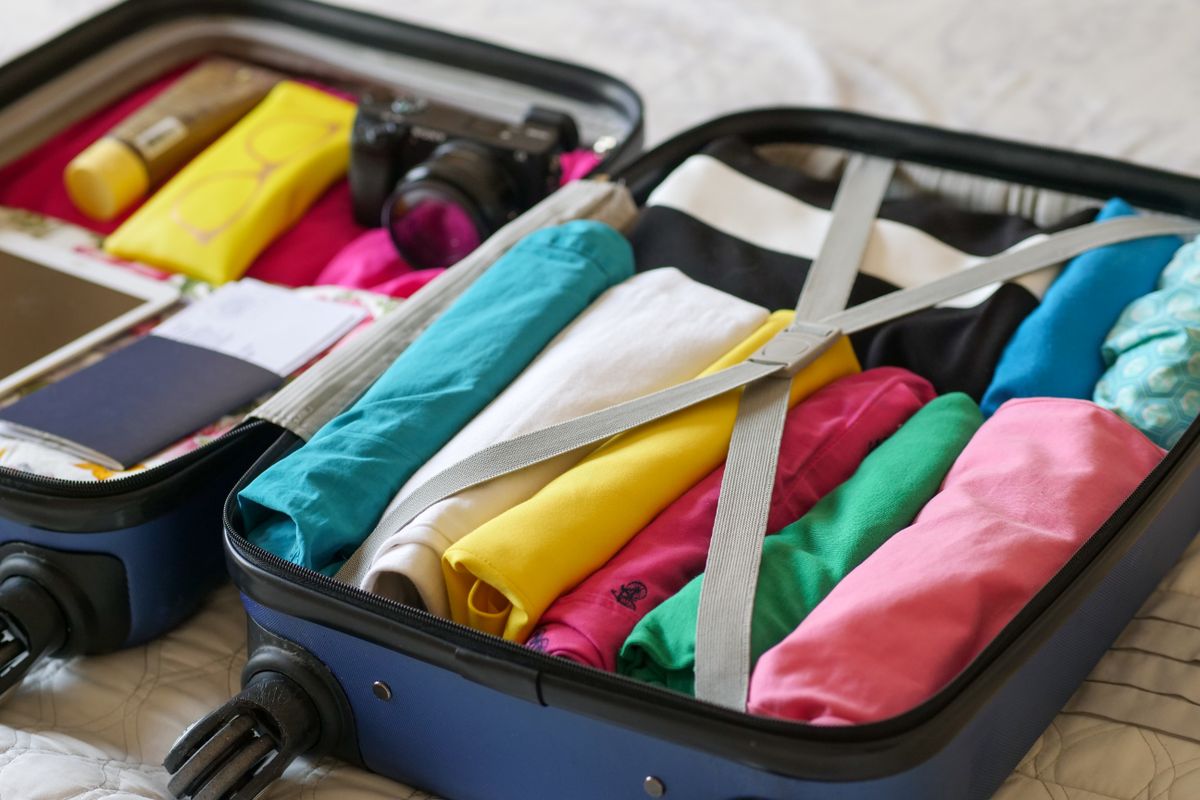
Most packing advice stops at “pack light”, which is true and useless. The useful version is a list with numbers attached, a rule for what those numbers include, and a test for anything that wants to be added. This is one such list: fifteen pieces for roughly a week away, workable for longer with a sink, built so that no item depends on another specific item to be wearable.
What the fifteen includes
Thirteen garments and two pairs of shoes. The shoes are counted because they are frequently the bulkiest thing in the bag and because leaving them out is how a fifteen-piece list becomes a nineteen-piece trip.
Outside the count: underwear and socks, sleepwear, toiletries, chargers, and the bag itself. The bag is not a garment, but it is a decision worth making explicitly — one carry-on plus one personal item, with a fold-flat tote inside it for the days you acquire something.
On-body items. The outfit you travel in is made of pieces from the fifteen, so wearing them does not subtract anything — the merino crew and trousers on the plane are items 2 and 8, not extras. What sits outside the list is a winter transit coat: it goes on your body and stays there, because a coat that fills a third of a carry-on is the biggest packing mistake available.
The palette rule
Two neutrals and one accent. A deep neutral (charcoal or ink), a light neutral (ecru or oat), and a single accent that appears once, in the scarf. Every top works with every bottom, which is the whole mechanism — fifteen pieces in three tones produce more outfits than twenty pieces in seven, because nothing is waiting for a partner that did not come.
Apply two tests before anything goes in the bag. First: does this piece work with at least three other pieces in the pile? Second: have you worn it at home in the last month? A garment that fails either test is a maybe, and maybes are what overflow a bag.
The fifteen
1. A fine-gauge merino T-shirt in ecru. Short sleeved, close to the body. Merino rather than cotton because it can be worn two or three days between washes without announcing it, which is the property that makes a fifteen-piece list viable at all.
2. A long-sleeved merino crew in charcoal. The layer that does the temperature work. Dense jersey rather than a lofty knit — it holds its shape at the elbows and packs flatter.
3. A cotton oxford shirt in white or ecru. The only piece with a structured collar, and therefore the piece that makes a knit-and-trousers outfit look deliberate. Worn alone on warm days, under the crew on cold ones, under the blazer when the day requires it.
4. A linen or linen-blend shirt in oat. Long sleeved, worn open over the merino tee as a sun layer and closed as a shirt. It creases; that is the trade for being the only fabric here that is comfortable above 80°F.
5. A merino cardigan in oat. Mid-gauge, hip length, buttons that stay shut. It is the cheapest way to add warmth to the list because it works as a top on its own and as a mid layer under the blazer, so it multiplies rather than replaces.
6. A fluid shell top in the deep neutral. Tencel lyocell, cupro or silk — a fabric that hangs and reads as evening. This is what makes the blazer and boots into a dinner outfit.
7. An unstructured blazer in navy. Soft shoulder, half lined, wool or high-wool blend. It is the only structured thing in the bag and it covers every occasion that requires one. Our breakdown of what a blazer has to do to cover five outfits applies directly here, since travel is where the range gets tested.
8. Wool-blend trousers in charcoal. Straight or gently tapered, with a little elastane for recovery at the knee. These are the travel-day and meeting trousers, and a mid-weight wool blend resists creasing better than linen or heavy cotton.
9. Straight-leg denim in indigo. Mid to high rise, low stretch — the bottom that takes a sneaker without argument.
10. A knit midi skirt in the deep neutral. A jersey or ponte column falling below the knee. It packs to nothing and covers the hot evening when trousers are the wrong answer.
11. A knit dress in the deep neutral. Sleeveless or short sleeved, worn alone in heat and under the blazer or cardigan when it cools. One garment that is a complete outfit is worth two that are halves.
12. A packable rain shell. Unlined, with a hood, light enough to be carried on the days it is not worn. Weather is the one variable you cannot plan around, and this is the piece that absorbs it.
13. A large wool scarf in the accent tone. Long enough to wrap twice. It is the only place colour enters the list, and on a plane or in a cold restaurant it is the warmth you can add without unpacking anything.
14. Leather sneakers. Broken in, and walkable for a full day. The pair goes on your feet in transit, since they are the bulkiest of the fifteen.
15. Ankle boots or leather loafers. The dressed end of the shoe range, chosen for whether the trip involves weather or a dining room.
Weather and the one formal slot
Cold is handled by stacking: merino tee, merino crew, blazer, scarf, coat. That is five layers on the top half, which covers more than most trips ask for. Heat is handled by subtracting down to the T-shirt and the skirt or linen shirt — the list is built so the hot-weather outfit is a subset of the cold-weather one, not a second wardrobe.
For the one occasion that requires more than usual — a dinner, a wedding, a presentation — the combination is the shell top, the midi skirt or trousers, the blazer and the boots. Nothing additional gets packed for it. If a trip has two such occasions, wear the same combination in a different order the second time.
Rain is the shell. Sun is the linen shirt worn open with the sleeves down.
What not to pack
Anything you have not worn at home in the last month. A third pair of shoes. A second dressy option, since the shell top and blazer cover the category twice over. Clothes that need an iron — mostly crisp cotton and linen shirting. Light-coloured bottoms, which show every mark and cannot be worn two days running. And the just-in-case category in general: the shell covers weather, the cardigan covers cold, the blazer covers formality. Anything existing for a scenario those three already handle is dead weight.
Washing on the road
Plan on one sink wash mid-trip rather than a laundry day. Merino and the shell top wash and dry overnight; denim and the blazer do not, so wear them in that order. Air knits overnight instead of washing after each wear — most of the list takes two or three wears before it needs water. Our guide to washing wool sweaters covers the method, and if you are buying anything new for the trip, reading the fibre label first tells you more about how it will survive a sink and a hang-dry than any product description.
Where the money goes, if you are buying
Two items carry the list: the blazer and the walking shoes. Both are worn nearly every day of the trip and both outlast it. Everything else can be the ordinary version. A shorter list is the point in itself — fewer garments bought, worn harder, kept for years.
FAQ
- Do the clothes I wear on the plane count toward the fifteen?
- Yes, with one exception. The garments you travel in are drawn from the fifteen, so wearing them changes nothing about the count. The exception is a heavy winter coat worn in transit: it goes on your body and over the list, the same way a winter coat sits outside a seasonal capsule.
- How many pairs of shoes should a travel capsule include?
- Two. One pair you can walk in for a full day and one that reads dressed. A third pair is usually the point at which a carry-on becomes a bag about shoes rather than clothes.
- How do fifteen pieces cover both a hot afternoon and a cold evening?
- By layering rather than by packing two wardrobes. A merino layer under a shirt, the blazer over it and a scarf at the neck handles the cold end; removing down to the T-shirt and skirt handles the hot end. No garment is destination-specific.
Edited by
Dana Reyes
Researches garment construction, fibre content and brand sustainability claims. Ten years between the retail floor and editorial fact-checking.